Flair Techniques: How to Impress Without Spilling
Fernando Giraldo
February 25, 2026
Bartending moves
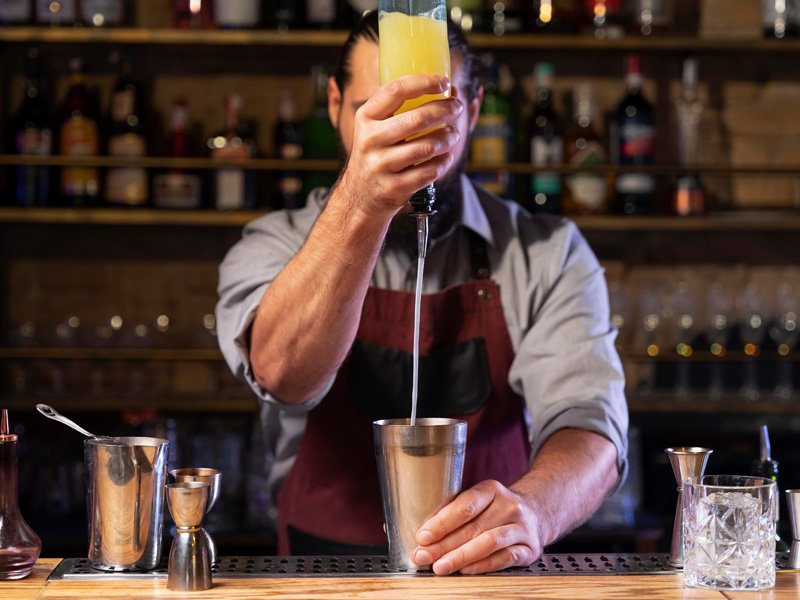
Learn safe flair moves you can practice at home and use behind any bar.
⏱ 7 min read • By Signature Bartender School
You’ve seen it in movies, viral videos, and maybe at your favorite bar—bottles spinning through the air, shakers flipping behind backs, and bartenders making drink preparation look like a performance. That’s flair bartending, and while it might look like it requires superhuman coordination, the truth is that anyone can learn the basics with the right approach and practice.
Flair bartending isn’t just about showing off (though let’s be honest, that’s part of the fun). It’s about creating an unforgettable experience for your guests, increasing your tips, and genuinely enjoying your time behind the bar. The best part? You don’t need to juggle five bottles to make an impression—even small, subtle moves can wow your customers.
Let’s break down what flair bartending actually is, why it matters for your career, and five beginner-friendly moves you can start practicing today.
What Exactly Is Flair Bartending?
Flair bartending is the art of entertaining guests through skilled manipulation of bar tools, bottles, and glassware while preparing drinks. Think of it as the intersection of bartending and performance art.
There are actually two types of flair:
Working Flair
These are practical moves you can incorporate into everyday service without slowing down your workflow. A quick bottle spin here, an ice toss there—nothing too flashy, but enough to catch your guests’ attention and make the experience memorable.
Exhibition Flair
This is the high-flying, competition-level stuff you see in flair bartending championships. We’re talking multiple bottles in the air, complex routines, and moves that take years to master. It’s impressive, but it’s not what most working bartenders will use daily.
For this article, we’re focusing on working flair—moves that are practical, safe to learn, and actually useful behind a real bar.
A Brief History of Flair
Flair bartending has been around longer than you might think. The concept dates back to the 19th century with Jerry ‘The Professor’ Thomas, who famously created dramatic presentations while making drinks, including pouring flaming streams of whiskey between mixing glasses.
The modern flair movement really took off in the 1980s when a T.G.I. Friday’s bartender named John Bandy started experimenting with bottle flips and tricks to entertain his guests. His work eventually caught Hollywood’s attention, and he was hired to choreograph and train the cast of the 1988 film ‘Cocktail’ starring Tom Cruise. That movie, for better or worse, put flair bartending on the map and inspired a whole generation of bartenders.
Today, flair has evolved into a legitimate competitive sport with organizations like the World Flair Association hosting international championships. But you don’t need to compete to benefit from learning a few moves.
Why Should You Learn Flair?
Let’s be real: flair bartending isn’t for every bar or every situation. You probably shouldn’t be flipping bottles at a quiet wine bar or during a Sunday brunch rush. But in the right environment, flair can:
- Increase your tips significantly (guests love a show)
- Make you more memorable to customers and managers
- Improve your coordination and handling behind the bar
- Make your job more fun and engaging
- Set you apart from other bartenders in a competitive job market
Even if you never plan to flip a bottle in public, practicing flair improves your overall bar skills. You’ll develop better hand-eye coordination, smoother movements, and more confidence in handling glassware and bottles.
Before You Start: Essential Safety Rules
Before you pick up a bottle and start practicing, let’s cover some ground rules that’ll keep you (and your surroundings) safe:
- Start with practice bottles: Invest in FlairCo practice bottles or similar—they’re weighted like real bottles but won’t shatter when dropped. Trust us, you’ll drop them. A lot.
- Practice over soft surfaces: Put down rubber mats or practice on carpet until you’ve got the basics down.
- Never practice at work: Learn moves at home until you can do them perfectly 10 times in a row without a mistake. Then, and only then, try them behind a real bar.
- Never flair drunk: This should be obvious, but it needs to be said. Alcohol and flying glass bottles don’t mix.
- Be ambidextrous: Practice every move with both hands. It feels weird at first but makes you a much better flair bartender.
“Service First, Flair Second, Competition Always. — Flair Bartending Association motto”
5 Beginner Flair Moves to Practice at Home
Ready to get started? Here are five moves that look impressive but are totally achievable for beginners. Start with these, master them, and you’ll have a solid foundation to build on.
1. The Behind-the-Back Ice Toss
This is often the first flair move bartenders learn, and it’s a crowd-pleaser. Since ice is the first step in making most drinks, why not make it interesting?
How to do it: Hold an ice cube (using tongs or a scoop—never bare hands) behind your back at hip level. Toss it up and over your shoulder, catching it in your glass or tin that you’re holding in front of you. The key is a smooth, controlled toss—not too much power.
Practice tip: Start by catching the ice in a large mixing tin before moving to smaller glasses. Expect to miss a lot at first—that’s totally normal.
2. The Tin Flip
A simple flip of your cocktail tin that looks effortless when done right. It’s subtle but adds polish to your movements.
How to do it: Hold the tin with your fingers on the bottom. Flick your wrist to send it spinning upward (just one rotation), then catch it by the base. Keep the motion controlled—you’re not trying to send it to the ceiling.
Practice tip: Empty tins are harder to flip than full ones because there’s no weight at the bottom. Practice with some water in the tin first.
3. The Spoon Spin
Bar spoons are great for beginner flair because they have long handles that give you more control. This move looks smooth and professional without being risky.
How to do it: Hold the bar spoon between your thumb and index finger near the middle. Use your thumb to push it around, letting it rotate around your finger. With practice, you can transfer it from finger to finger.
Practice tip: Start slow and focus on smooth, controlled rotations. Speed comes with muscle memory.
4. The Back-of-Hand Cradle
This move involves catching a bottle on the back of your hands and bouncing it back—looks impressive but is actually quite forgiving once you get the motion down.
How to do it: Toss the bottle gently from one hand across your body. Let it land on the backs of both hands (held together, slightly cupped). Spring it back up by raising your hands and catch it in your opposite hand.
Practice tip: Start with nearly empty bottles, then work up to bottles with more liquid. Taller bottles like Galliano are actually easier for this move.
5. The Thumb Roll
A quick, subtle move that’s great for transitioning between tricks or just adding a little flash to pouring.
How to do it: Hold a tin or bottle and use your thumb to push it outward, letting it rotate around your thumb before catching it again with the same hand. It’s a quick, one-handed move.
Practice tip: This one’s all about the thumb push. Too weak and it won’t rotate fully; too strong and you’ll lose control. Find that sweet spot.
Your Practice Routine
Consistency beats intensity when learning flair. Here’s a practice schedule that works:
- Daily practice: 15-20 minutes of focused practice with practice bottles
- Drill each move: 10 successful repetitions before moving on
- Record yourself: Watch your form and identify what needs work
- Start slow: Speed comes naturally once the motion is muscle memory
- Take breaks: If you’re getting frustrated, step away and come back fresh
The ‘Rule of 10’ is important: if you can’t successfully complete a move 10 times in a row at home, you’re not ready to try it at work. Period.
Ready to Level Up?
Flair bartending is a journey, not a destination. Even the best competitive flair bartenders are constantly learning new moves and refining their technique. The moves we’ve covered here are just the beginning—once you’ve got these down, you can start combining them into sequences and eventually learn more advanced techniques.
At Signature Bartender School, our Professional Bartender and Advanced Mixology programs include hands-on flair training with experienced instructors. We’ll help you build the fundamentals safely and confidently, so you can add some showmanship to your bartending toolkit.
Remember: the goal isn’t to become a circus performer. It’s to enhance the guest experience and make your job more enjoyable. Even one or two smooth moves in your arsenal can make a difference in how customers perceive you—and how much they tip.
Now go grab a practice bottle and start practicing. Your future guests will thank you.
🎯 Learn flair bartending hands-on at Signature Bartender School → Enroll Now
SHARE IT ON SOCIAL MEDIA :
You May Also Like..
Programs
Company
Training California’s best bartenders for over 10 years. Your hospitality career starts here.
Contact Information
Contact us and a member of our team will get in touch with you as soon as possible.
-
877 Commercial St, San Jose,
CA 95112 -
43528 Fremont Blvd, Fremont,
CA 94538 - 614 Fifth Ave, San Diego, CA 92101
- admin@signaturebartenderschool.com
- info@signaturebartenderschool.com
- Office: (669) 343 5636
- Admin: (669) 343 2401
Copyright © 2024 Signature Bartender School. All right reserved.